 More Oil Pump & Lubrication Articles:

The oil pump supplies oil to lubricate your engine. If the oil pump is worn or is not turning, the engine will suffer a loss of oil pressure, which may result in engine damage or engine failure.
The first sign of trouble may be a low oil pressure warning light, a drop in the normal reading on you oil pressure gauge (if your car has one), or the appearance of ticking or clattering sounds from your engine.
As a rule, most engines only need about 10 PSI of oil pressure for every 1,000 RPM of engine speed. Oil pressure will read higher than normal when a cold engine is first started because the oil is thick. Oil pressure will gradually drop as the engine warms up and the oil thins out. So normal oil pressure on a warm engine cruising down the highway is typically 30 PSI up to 45 PSI.
If your oil warning light is on or your oil pressure gauge is reading low, the first thing you should do is stop your car, turn the engine off, let it sit for a few minutes, then check the oil level on the dipstick. If the oil level is at or below the ADD line, add a quart of oil to bring the level back up to the full mark. Add as much oil as is needed to raise the level to the full mark. Then restart the engine. If the warning light remains on, or the oil pressure reading does not climb back up to its normal range, or the engine noise does not go away, you may have a bad oil pump.
The other possibilities include a bad oil pressure sending unit, or a problem with the oil pressure warning light circuit or oil pressure gauge.
If the engine is NOT making any unusual noises and seems to be running normally, and the oil level on the dipstick is FULL, but you are still getting a low oil pressure warning light or low gauge reading, the fault could be a bad oil pressure sending unit.
The oil pressure sending unit is mounted on the engine block. On some applications, there is a spring-loaded pressure-sensitive diaphragm with a switch inside the sending unit. This switch completes the circuit to the low oil pressure warning light if oil pressure drops below a certain threshold. The unit may stop working if the diaphragm inside fails, if the switch is stuck, if the small hole that allows oil to enter the sending unit becomes plugged, if there is a loose, corroded or broken wiring connector at the sending unit, or there is a fault in the wiring circuit between the sending unit and warming light.
On vehicles that have an oil pressure gauge (electronic, not mechanical), the oil pressure sending unit has a small rheostat inside that sends a variable voltage signal to the oil pressure gauge when the diaphragm moves. A worn spot on the rheostat or any of the other problems just described for the simple pressure-type oil pressure switches can cause a problem.
On many Ford vehicles that were built from 1980 through the 1990s, the oil pressure sending unit has two switches, a low pressure and a high pressure. These vehicles also have an oil pressure gauge, but the reading on the gauge is not a true indication of real oil pressure. As long as the pressure to the sending unit is between high and low, the gauge will read normal. If oil pressure drops and trips the low pressure switch, the dash gauge will now read low. Or, if oil pressure goes up and trips the high switch inside the sending unit, the dash gauge will read high. Consequently, don't rely on the oil pressure gauge for an accurate reading in these vehicles. It is only a gross indication if the oil pressure is low, normal or high.
If the engine is NOT making any unusual noises and seems to be running normally, the oil level on the dipstick is FULL, and you have replaced the oil pressure sending unit but are still getting a low oil pressure reading on the dash gauge, the fault could be in the wiring circuit between the sending unit and gauge, or the gauge itself might be bad.
Check the wiring connections on both ends as well as wiring continuity between the sending unit and gauge. If no wiring faults are found, hook up a pressure gauge directly to the oil pressure port on the engine and check oil pressure with the engine running. If the engine-mounted gauge shows normal oil pressure but the dash gauge is reading low, the problem is a bad dash gauge.
On the other hand, if the engine-mounted pressure gauge reads low and you have done all of the above, chances are the oil pump is worn, or it is not picking up enough oil because of a restriction or blockage in the pickup screen in the bottom of the crankcase.
The pickup tube has a screen on the end to prevent large chunks of anything bad that ends up in the crankcase from being sucked into the pump. But we are talking BIG chunks of debris, not normal wear particles or carbon or dust or other microscopic-sized abrasive particles that can cause pump wear over time.

The only way to inspect the pickup tube is to remove the oil pan from the engine. If the tube is clogged or full of sludge, replace it. Trying to clean out the tube and screen is very difficult as debris can remain trapped inside and out of sight.
Most people don't know that the oil pump is the only engine component that is lubricated with unfiltered oil. Remember, the oil filter is AFTER the pump, so the oil the pump sucks up from the crankcase is totally unfiltered (except for the relatively coarse pickup screen mentioned earlier). Consequently, if the oil is not maintained very well, or the vehicle operates in dirty, dusty environment, or the pistons and cylinders are worn and allow a lot of blowby into the crankcase, the oil pump will wear at an accelerated rate.
The tolerances inside most stock production oil pumps are not very close, so one pump's flow may vary as much as 20% to the next. Even so, it's usually more than good enough for a stock engine.
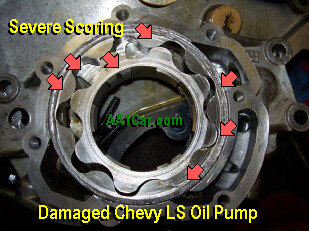
If the gears inside the oil pump are worn, or there are excessive clearances between the gears and pump housing, or the housing or end plate are worn, the pump will leak pressure internally and may not deliver as much oil flow to the engine as it did when it was new.
The rotating gears inside the oil pump siphon oil from the crankcase through a pickup tube into the pump. The gears then push the oil through the pump and out the discharge port. From here, the oil goes to the oil filter. If the oil is really cold and thick, the bypass valve on the oil filter will open and allow unfiltered oil to bypass the filter. This is necessary so a cold engine will still develop normal oil pressure until it warms up and the oil thins out.

The three basic types of oil pumps include:
* Twin gear pumps, where one gear is connected to a shaft that is driven off the camshaft or distributor. This type of pump is usually mounted inside the oil pan on the bottom of the engine block. The pump usually turns at half engine speed.
* Gerotor pumps that have a small gear rotating inside a larger outer gear. This type of pump can also be mounted on the bottom of the engine inside the oil pan.
* Internal pumps, which are usually mounted inside the front engine cover and are driven by the crankshaft. The gear design is usually a gerotor style, but this type of pump turns at the same RPM as the engine. Thus, it can generate more flow and oil pressure. This design is often used on overhead cam engines.
As mentioned earlier, the only way to know for sure if an oil pump is generating normal pressure is to remove the sending unit on the engine block, and screw-in a mechanical oil pressure gauge. If the gauge does not show normal oil pressure, the pump is bad, or the pickup tube is blocked.
There is no way to easily bench test an oil pump to see if it is good or bad. To get an accurate indication of flow, you would have to simulate the resistance the pump sees inside an actual engine, and have a highly accurate gauge that can measure glow in gallons per minute. Oil pump manufacturers have their own custom test equipment that can bench test the flow characteristics of their oil pumps, but this type of equipment is not available to repair shops or anyone else.
About all you can do is disassemble your oil pump and look for obvious signs of wear or damage. With oil pumps mounted inside the bottom of the engine, this requires removing the oil pan. With oil pumps mounted inside the front engine cover, it requires tearing everything off the front of the engine and removing the cover. Both can be a big, expensive jobs!
Internal oil pump clearance specifications vary depending on the type of pump and the manufacturer, but minimal clearances are essential for good flow and oil delivery. Feeler gauges can be used to check the clearance between the gears, between the gears and housing, and between the tops of the gears and the cover. If clearances exceed specifications, the pump is worn or has sloppy assembly tolerances and needs to be replaced.
With twin-gear type pumps, it is possible to block sand or machine down the face of the pump housing to reduce the clearance between the tops of the gears and the pump cover. The flow characteristics of the pump can also be improved by gently rounding and blending the inlet and outlet ports inside the housing to eliminate sharp edges. Some high performance oil pumps have additional slits and slots to control internal lubrication and to eliminate cavitation that can disrupt oil flow at higher engine speeds.

If you are replacing an oil pump with a new one, make sure it is the correct pump for your engine. A pump that does not have sufficient flow capacity may starve the engine for oil. On engines where the pump bolts up against the bottom of the block, there may or may not be a gasket or o-ring between the pump housing and engine. This can be a leak path for oil pressure, so make sure the gasket or seal is installed properly. If there is no gasket, some aftermarket suppliers now make thin copper gaskets that can be installed between the pump and engine to prevent pressure losses.
With crankcase mounted oil pumps, don't reuse the old oil pan gaskets even if they are rubber rather than cork or fiber. Install new gaskets for a leak-free seal.
More Oil Pump & Lubrication Articles: Click Here to See More Carley Automotive Technical Articles