 Related Articles:
Use the VIN Plate to Check for Recalls
Copyright AA1Car.com June 2026
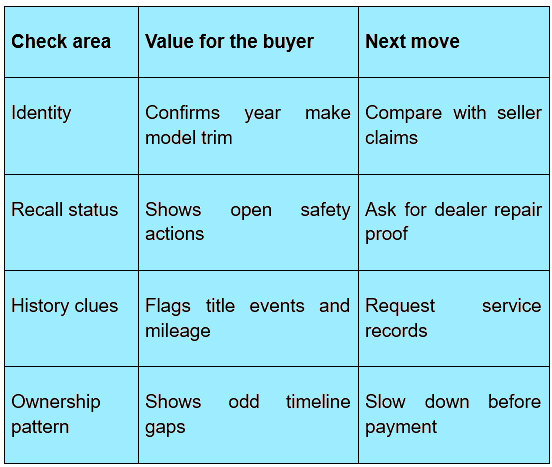
A quiet car lot can hide loud problems. Paint shines. Tires look fresh. Interiors have been cleaned and thoroughly detailed. But you need to ask yourself, "Is this car safe to drive? A Vehicle Identification Number (VIN) plate lookup may reveal undisclosed problems such as open recalls that have not been repaired, so always check the vehicle's records before you buy.
.Smart research starts before a test drive. Use a VIN plate lookup to connect the vehicle's serial number with its history details and recall records. View vingurus.com plate lookup. A plate lookup helps if the seller does not have a vehicle's complete recall and repair records. It also helps shoppers spot title clues, mileage gaps and safety concerns before trust forms.
Manufacturers and regulators will undertake a recall of a product when an issue has been detected with a product that qualifies as defective or is not compliant with safety standards. Such problems may be the result of issues with the steering, brakes, fuel system, emission control system, engine computer or module software, wiring, tires, child car seats or airbags. Almost every vehicle manuacturer has been impacted by the recent Takata airbag recalls, which have affected millions of vehicles. Many of these older airbags can become dangerous as they age, reducing crash protection or even causing injury or death!
Plate data matters because two cars from the same year may not share the same repair status. One received dealer work. The other still has safety issues. That gap affects vehicle safety and the selling price you should pay.
A family once inspected what appeared to be a clean crossover. Then plate lookup led to a recall notice for a brake booster issue. The short test drive they took felt normal. No warning lights appeared and the brakes felt normal. Even so, there was a potential risk of brake failure lurking under the hood of that vehicle that had not been inspected or corrected. The family asked the dealer to fix it before they bought the car, and the dealer did.
A car can feel still safe on a quiet street while an unrepaired defect waits for conditions that may cause a serious problem. Recall research gives you leverage and helps you make an informed decision with proof instead of hope.
A plate check supports determining whether your car has outstanding recalls that have not been inspected or repaired. It does not guarantee your car won't have problems later on, but it will give you peace of mind that for now there are no known issues that may cause trouble and cost hundreds of thousands of dollars to fix. Recall repairs performed by a new car dealer are free so why pay for repairs if you don't have to. Check for any outstanding recalls and have them taken care of before you buy the vehicle.
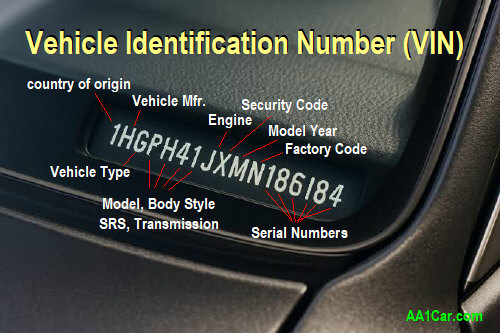
The VIN plate is typically located at the lower driver side of the windshield. It is a thin metal plate permanently riveted to the dash. The 17-digit VIN is a mixture of letters and numbers indicating the year, make and model of the vehicle along with engine and drivetrain information, and the vehicle's own unique serial number. The VIN number may also be located on a label on the door pillar, on the firewall in the engine compartment, and on the vehicle title and registration papers. Make sure these numbers match! Missing or altered numbers, or numbers that do not match the paperwork are a serious red flag. Do not proceed with the purchase until further investigation has been made.
If a plate check reveals outstanding recall notices, ask whether dealer repairs have been made to close the recall. Sometimes recall data updates may lag behind the actual repairs by weeks or months.
When you get into a car today, it ought to be able to drive safe, which means that it should properly start, steer and stop without having any issues. You should consider these warning signs, for example a spongy brake pedal, being pulled to the left or right while applying your brakes, and squealing brakes; and schedule an appointment to have your brakes checked if you are experiencing any of these symptoms.
When you first start the engine, watch for any warning lights that remain illuminated. Most instrument clusters will light up all the icons to show they are functioning, but then turn them all off unless a fault has been detected in a particular system. Further diagnosis may require a scan tool check using the onboard diagnostic connector to check for trouble codes.
Look under the hood. Low coolant, a cracked hose or visible leaks can cause the car to overheat. A leaky exhaust system should never be ignored because of the risk of carbon monoxide poisoning. If drivers notice unusual exhaust odors or smoke, further investigation is a must to determine if the vehicle is safe to drive.
Suspension rattle, clunks and squeaks often indicate worn or damaged parts. Worn control arms or a bad ball joint or tie rod end can lead to loss of steering control if a part fails. Wheel alignment that is out of specifications will accelerate tire wear, may cause a steering pull to one side or cause poor handling. A failing brake line, brake caliper or wheel cylinder can cause a sudden loss of stopping power. Old brake fluid absorbs moisture over time, reducing its ability to handle heat. This may lead to brake fade and the inability to stop if the brakes get too hot. These problems need replacement.
Modern vehicles are equipped with numerous safety systems that are intended to reduce driver error and accidents. Automatic emergency braking, electronic stability control, antilock brakes, lane centering and blind spot alerts help drivers react better to changing driving conditions or emergency situations. Newer cars often use optical cameras, radar to monitor traffic and reduce safety risks. But none of these systems can keep you safe if there is fault that prevents them from functioning normally.
A cracked windshield can harm the field of vision. Broken turn signals confuse others. A blocked rearview mirror creates blind spots. A glowing airbag light means the car’s safety system needs attention. The driver assist systems and safety devices that are designed to protect occupants means little if a key sensor fails or there is a wiring fault. If any of these systems are not in good working condition or are off line (warning light on), your car may no longer be safe to drive. Don't take chances behind the wheel of a potentially dangerous vehicle. Park it and get it fixed!
Confirm open recalls by plate or VIN.
Test lights, horn, mirrors and wipers.
Watch for any warning lights that stay on after starting the engine.
Did the engine start easily and idle smoothly?
Put the transmission in gear and notice how it feels as you start to drive.
There should be no slipping or unusual noises.
Notice how the brakes feel during your first low speed stop.
The pedal should feel firm with no vibrations, and remain firm as you apply the brakes.
Listen for suspension noise and pay attention to how the vehicle handles and rides.
Confirm the engine sounds normal, runs smoothly and there are no loud exhaust noises.
After completing the test drive, turn the engine off, set the transmission in park and check underneath
the vehicle for any fluid leaks.
If a vehicle's brakes or steering feel unsafe during the test drive, end the test drive and ask to have
the brakes, steering or suspension checked as needed.
Car safety ratings help compare models before purchase. A crash test shows behavior in controlled impact conditions. Tests evaluate structure, restraints, headlights and crash avoidance tech. Crashworthiness shows how the body manages impact. Structural integrity matters because hidden structural damage changes crash energy through the cabin.
Ratings describe a model when new. A new car with factory parts differs from an old vehicle with poor repairs. Severe damage, rust, flood exposure or damage that might not be immediately apparent can weaken the overall vehicle. Damage can worsen over time if moisture reaches seams, wiring or sensors.
There are some defects in your vehicle that can render it unsafe (even though it may still drive at present). For example, if you smell gas, have a heavy steering pull, notice a bulging tire, or see coolant leaking from the engine, you need to call a shop or tow the vehicle home – do not continue to drive any further.
Err on the side of caution when facts are missing. If a shop says the repair affects safety and performance, listen. Auto repair records should match the claim. A fresh passing inspection helps only when it lists brakes, steering, tires and exhaust system.
Good research protects your money. Open recalls can delay registration and may end up costing you money if you fail to take advantage of the free repairs that are available with an open recall. A timely fix can also prevent further damage as miles and age accumulate.
Is that car safe to drive? The answer comes from records, road feel and expert eyes. Plate lookup gives the first signal. Recall checks show known defects. Never buy a vehicle without first test driving it, no matter how good it looks. Driving a car reveals behavior. Inspection finds signs of damage hidden during a five minute look.
When it comes to safety, no single tool does the whole job. Combine plate data, recall records, ratings and a mechanical review. That mix helps make informed decisions without panic. Keep your car in good working order. The car is still worth buying only when facts support confidence. A car is safe to drive only after records and road feel agree.
Can VIN plate lookup prove recall repairs were completed?
It can point to identity and recall status. Completion needs dealer proof.
Can a car pass a road test if it is deemed unsafe to drive?
It might. A short driving route won't subject the vehicle to heat, highway speeds or panic stops.
Does a clean title prove overall condition?
No. A clean title does not rule out poor repairs or hidden rust.
Why do recalls matter if there was no crash?
Parts can fail without necessarily causing a crash, but such a failure make endanger your safety by causing a vehicle to stall, catch fire
or become disabled on a busy highway.
Should every open recall stop a purchase?
Not always. Some remedies are simple. But make sure the problem will be fixed before finalizing your purchase of the vehicle.
Related Articles:  Click Here to See More Carley Automotive Technical Articles