
Home, Auto Repair Library, Auto Parts, Accessories, Tools, Manuals & Books, Car BLOG, Links, Index
What to Check on a Used 4x4: Buyer’s Checklist
Off-Road Dream or Previous Damage: How to Check a 4x4 Before BuyingCopyright AA1Car.com June 2026
Your dream 4x4 awaits on the lot. The price looks fair. The seller smiles. Reality demands caution. A used 4x4 hides serious problems beneath shiny exteriors. One hasty purchase costs thousands in repairs and destroys your confidence before adventures begin.
Before you buy a pre-owned 4x4 you need a clear vision about what to examine. Buying a pre-owned 4x4 requires thorough evaluation that separates smart purchases from expensive mistakes. A VIN decoder like vingurus.com vin decoder reveals the vehicle's complete history before commitment. That tool uncovers accident records and previous damage. Understanding the vehicle's past protects you from inheriting costly repairs from previous owners.
Your 4wd journey begins with honest assessment. The best buyers approach this methodically. This article covers essential checks that protect your investment when purchasing a second-hand vehicle.
Off-road conditions expose hidden damage quickly. A 4x4 in mud reveals mechanical weakness immediately. The transfer case distributes power between front and rear axles. When this fails on a trail you face immobilization far from help.
Test the transfer case by shifting between high range and low range. Listen for grinding. Engage the four-wheel drive and feel smooth power delivery. The lever should shift without grinding. A damaged transfer case creates dangerous handling.
The differential allows wheels to turn at different speeds when cornering. A faulty differential locks unpredictably or slips excessively. Activate the differential lock and listen for clean engagement. Check the differential fluid for metal shavings indicating wear. Burnt smelling fluid signals overheating.
Each axle contains shafts and bearings that deserve inspection. Look for shaft damage carefully. Worn bearings produce humming noises under load. A bent shaft wobbles noticeably.
Walk around slowly with a light examining everything. Look for excessive wear on suspension parts. Check where the vehicle sits naturally. Does it lean to one side? That suggests weak springs or bent chassis.
Open the hood and examine all visible components. Look for cracks in the engine block. Check all fluid levels carefully. The coolant should be clean without rust particles. The oil should be amber, not black, and be free of any metal shavings or yellow foam. Dirty oil could be an indication of poor maintenance and not changing the oil often enough.
Examine the windscreen for cracks from rocks. Check under the carpet for water stains suggesting flood damage. Sniff the interior for musty smells or unusual odors. Fresh cleaning might mask problems. Press body panels to feel soft spots in the metal. Rust appears first in door frame corners.
Test the steering wheel by turning lock to lock. If the steering feels loose or binds, it could indicate worn or damaged steering and suspension parts. Check the tires for uneven wear that could also indicate worn or damaged steering and suspension parts or wheel misalignment. Drive through a parking lot slowly. Does the vehicle steer straight or does it pull to one side? Any wheel vibration would suggest a bent rim or a need for rebalancing the tires. If you have concerns about the steering or suspension, have a mechanic inspect the suspension and perform an alignment check.
The brake system matters everywhere you drive. Press the pedal slowly. The pedal should travel a short distance and feel firm as you hold pressure on the pedal. A soft spongy pedal indicates air in lines. Pump the pedal several times. If it gets firmer the system is serviceable. If the pedal slowly sinks or goes to the floor, the vehicle has a leaky master brake cylinder or leaky brake caliper or wheel cylinder and will require major brake repairs. Listen for scraping sounds when driving and applying the brakes. Brake noice could indicate a need for new brake pads/shoes.
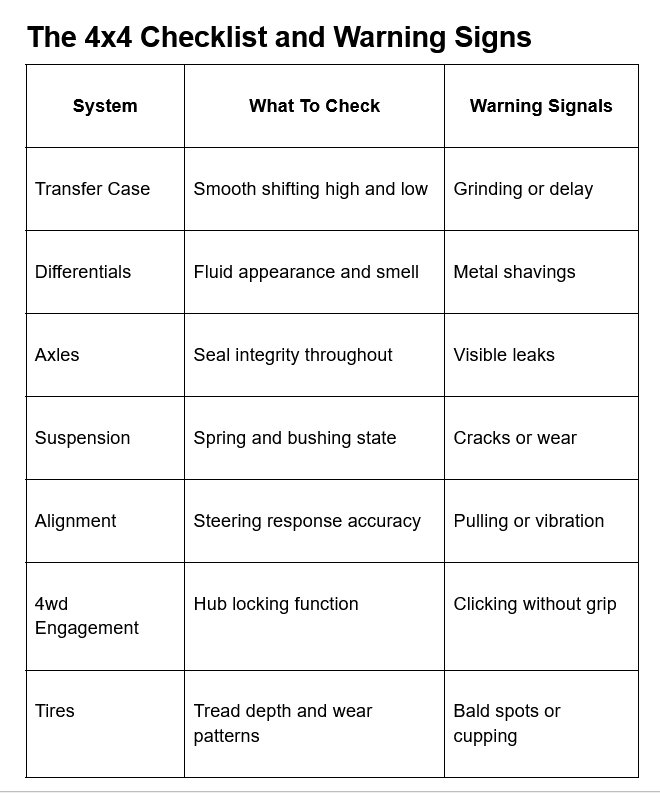
Examine the front wheels for uneven wear patterns. That reveals alignment or suspension issues. Check hub systems on vehicles with manual locking. The hubs should engage smoothly without resistance. Defective hubs need replacement before serious use.
Take the vehicle on varied terrain for thorough testing. Find a parking lot for initial maneuvers and evaluation. Turn the steering wheel fully and listen for CV joint clicking. Click sounds are normal but excessive noise means worn joints need repair.
Find a slight incline and test low range capability. The vehicle should climb steadily with power. Slipping wheels indicate transfer case problems. Test the diff lock if equipped. It should engage with solid grip on all terrain.
Drive on gravel to hear slippery surface performance. The 4wd system should provide consistent traction without slipping. Spinning wheels suggest worn tires or suspension issues need attention. Feel for vibration indicating bent components. Drive on the highway to test high-speed stability. Tire noise is normal for off-road tires with aggressive tread patterns. Check all electronics to make sure they function properly.
Avoid buying 4x4 models with major structural rust compromising safety. Surface rust is cosmetic but frame damage signals real danger. Rust holes in frame rails make vehicles unsafe for operation.
A seller who avoids questions raises immediate concerns. Transparent sellers welcome detailed inspection. They know their vehicle's true condition.
Dodgy modifications indicate corner cutting and hidden problems. Poorly welded repairs suggest amateur work throughout. Hasty fabrication hides underlying damage beneath surfaces. Reputable modifications come documented professionally and properly.
Excessive noise during test drives demands investigation. A knocking motor might have bearing damage. Grinding transmission could fail soon. Burning smells suggest overheating or electrical problems. A sniff of unusual odors saves expensive repairs later.
Negotiate confidently using inspection findings. Use results to justify a lower offer if any major faults are found. Transfer case issues warrant a big price reduction. Don't hesitate walking away from bad deals that don't feel right.
Create a checklist before visiting vehicles for inspection. Know what you want your 4x4 to accomplish. A Jeep Wrangler suits rock crawling adventures. A Toyota Land Cruiser excels at long-distance overlanding. A Nissan Patrol handles desert conditions. A Subaru Outback serves light adventure seekers well.
Research comparable vehicle prices in your area. Bring a friend to inspections for extra perspective. Take photos of fluid colors and rust spots for documentation.
Once you own your 4x4 change all fluids immediately. Use fluids that meet OEM specifications (motor oil, transmission fluid, differential and transfer case fluids, brake fluid, power steering fluid, engine coolant).
Plan upgrades carefully rather than impulsively purchasing parts. Oversized offroad tires with very aggressive tread patterns are great for offroad traction in mud and sand but may be very noisy for highway driving. You might want one set of tires for everyday driving and a second set for offroading. Aftermarket wheels come in a wide range of styles and price ranges. Forged aluminum wheels are more expensive than cast and are much stronger allowing them to take abuse that might cause a lesser quality wheel to fail. A skid plate to protect the engine, transmission and transfer case is also a must for serious offroad driving, as is a winch for pulling your vehicle out of deep mud or sand. Lighting upgrades are also popular, but note that many high output LED lighting systems are not legal for highway use and should only be used for offroad driving.
Protect investment through regular maintenance and checks. Oil changes preserve engine life significantly. Fluid level checks catch developing leaks early. Regular inspections catch small problems before expensive failure.
Buying a used 4x4 requires patience and systematic inspection rather than impulse buying. Your dream vehicle might await but rushing blindly invites disaster. The VIN decoder provides your starting point for research. Your personal inspection adds essential details. A test drive reveals the actual condition. A trusted mechanic delivers the final verdict.
The best 4x4 purchase comes from thorough preparation combined with realistic expectations about vehicle condition. A vehicle with documented maintenance history provides better value than cheaper options with unknown histories. Take time with this decision. Research thoroughly. Inspect carefully. Test drive honestly. Negotiate fairly. Only then will your acquisition deliver the off-road adventure you envision. Your confidence in off-road conditions depends on knowing your vehicle's actual state.
What single inspection reveals the most about the condition? A pre-purchase inspection by a certified mechanic reveals hidden damage. Their expertise identifies problems invisible during visual inspection. Damage might exist underneath or within electronic systems. Professional inspection catches serious issues before you commit money.
Should you avoid buying a used 4×4 if modifications exist? Poor quality mods indicate corner cutting throughout the vehicle. Quality modifications have professional installation records. Dodgy mods suggest abuse and neglect. Inspect modified vehicles extremely carefully.
What fluid condition indicates serious internal problems? Brown or black oil suggests irregular maintenance habits. Burnt smelling fluid indicates overheating issues. Metal shavings in fluid warn of internal wear damage. These warning signs point to expensive repairs.
How do you evaluate a tire's remaining lifespan? Use a tread depth gauge to measure remaining tread depth. If the tread is worn down flush with the wear bars, the vehicle will need new tires. Worn tires slip on wet or slippery surfaces easily. Cupping or uneven wear patterns reveal suspension issues. Tires that have visible cracks in the tread or sidewalls, or are more than six years old need to be replaced.
What hidden costs might emerge after purchase? Automatic transmission repairs can cost thousands of dollars. Some late model Ford and GM 4x4 trucks with 10-speed automatic transmissions have a history of transmission issues and failures. Transfer case rebuilds cost one thousand to three thousand dollars. Engine work costs depend on damage severity. A leaky head gasket or poor oil pressure are major issues that can be very expensive to fix and may even require a new engine.
 More Driveline Articles:
 Click Here to See More Carley Automotive Technical Articles