
Home,
Auto Repair Library, Auto Parts,
Accessories, Tools,
Manuals & Books, Car BLOG,
Links, Index
Clutch Diagnosis & Repair
Copyright AA1Car
When a clutch is working smoothly, a manual transmission is like an extension of your right arm. You have complete control over the gears. You decide when to shift and which gears to use. There's no intervention by a computer and no isolation from the drivetrain. You're in control and always aware of which gear you're in.
Many people who buy sporty cars, performance cars and even trucks want the control that a manual transmission provides. A stick shift puts the fun back into driving, at least on the open road. But around town in heavy stop-and-go traffic, having to constantly ride the clutch and shift gears can be a real pain and make you wish you'd opted for an automatic - especially if the clutch is acting up.
Clutch problems can occur at almost any mileage and for a wide variety of reasons. When the clutch pedal is released and the clutch disc starts to rub against the flywheel and pressure plate, it generates friction and heat. This helps absorb the shock loading that would otherwise jolt the drivetrain every time the transmission was put into gear or shifted. A little slippage under these conditions is a good thing because it helps dampen loads that might otherwise damage gears, U-joints and CV joints.
Many clutch discs have a spring-loaded center hub for this very purpose. The springs provide a little "give" when the clutch is engaged, and also help dampen harmonics and subtle variations in the engine's power output.
DUAL MASS FLYWHEELS
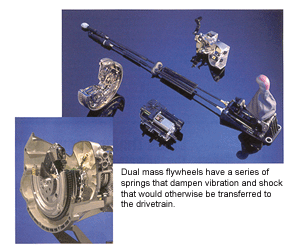
Taking this concept a step further, some vehicles use a second set of springs in a two-piece "dual mass" flywheel for essentially the same purpose. A dual mass flywheel has a series of springs mounted sideways between the primary and secondary flywheels. This provides extra vibration dampening and eliminates excessive transmission gear rattle for smoother clutch engagement and operation.
Dual mass flywheels were first used in 1987 on Chevrolet, Ford and GMC diesel-powered light trucks, and are found today on a number of trucks and even some European sports and luxury cars.
Dual mass flywheels can be expensive to replace. Because of this, some aftermarket suppliers have come out with conventional one-piece solid flywheels that can be installed in place of an original equipment dual mass flywheel. A solid flywheel can save you some money, but the trade-off may be increased drivetrain harshness and vibration.
Some OEMs caution against replacing a dual mass flywheel with a solid flywheel because it may contribute to premature transmission failure (due to increased shock loading of the gears).
CLUTCH DIAGNOSIS
No clutch will last forever. The facings on the clutch disc wear as the miles accumulate. Stop-and-go city driving with lots of shifting is obviously harder on the clutch than open highway driving. Pulling a trailer, off-roading and aggressive driving can also accelerate clutch wear.
The worst thing any driver can do is ride the clutch. Slipping the clutch excessively when starting out or when creeping along in traffic sends the temperature of the clutch soaring. If the facings get too hot, they may start to burn giving off an odor similar to burnt toast. If the clutch isn't given a chance to cool, the disc may be ruined along with the flywheel and/or pressure plate.
When the clutch disc becomes worn, the reduction in thickness may reduce the clamping force exerted by the pressure plate. Most diaphragm clutches actually exert more pressure as the disc wears due to the geometry of the spring and release mechanism. But once the disc is worn beyond a certain point, pressure starts to drop, increasing the risk of slipping under load. With older coil spring-style clutch covers, pressure drops in direct proportion to disc wear.
When a clutch starts to slip, the slippage will be most noticeable when the engine is under load, as when lugging at low speed in a high gear, when driving up a hill, when accelerating to pass another vehicle or when towing a trailer. The more the clutch slips, the hotter it gets and the more it wears. This accelerates the problem even more and may result in additional damage to the flywheel and pressure plate.
Another cause of premature clutch failure is oil contamination from a leaky rear main crankshaft seal, transmission input shaft seal or engine oil leak. Oil on the clutch facings will cause them to slip and grab unevenly. The result is typically chattering and jerking when the clutch is first engaged, and slipping when the clutch is under load.
Oftentimes, an apparent clutch problem really isn't the clutch, but the clutch linkage or something else. Many late-model vehicles have a hydraulic clutch linkage with a master cylinder attached to the clutch pedal and a slave cylinder on the bellhousing. The internal piston seals on the master and slave cylinder can develop leaks that allow a loss of pressure when the clutch pedal is depressed. This may prevent the clutch from disengaging or allow it to engage prematurely (as when sitting at a stop light with the pedal all the way in). The pedal may also feel soft and have less than normal resistance. Slave cylinders develop leaks more often than master cylinders because the slave cylinder is the lowest point in the system. Any rust or dirt in the hydraulic fluid is therefore more apt to settle in the slave cylinder where it can cause seal problems.
MORE ON CLUTCH DIAGNOSIS
Diagnosing clutch problems is difficult because a lot of different problems can cause the same kind of symptoms. Chattering or grabbing when the clutch is engaged can also be caused by burned or glazed linings, a warped or grooved flywheel, missing flywheel dowel pins, a worn pilot bearing/bushing, a worn bearing retainer, worn or damaged clutch disc or input shaft splines, bent or broken drive straps on the clutch, a bent or distorted clutch disc, a loose clutch cover or even missing flywheel dowel pins.
External causes of clutch chatter include loose or broken engine or transmission mounts, misalignment of the chassis and drivetrain components, worn or damaged U-joints or CV joints, a loose transmission crossmember, a worn or bent release fork, or loose rear left spring bushings or spring U-bolt nuts.
If the vehicle is equipped with a dual mass flywheel, a bad flywheel may be the cause of the slippage. Carefully examine the old clutch for heat marks on the pressure plate, disintegrated disc friction material and contamination of the friction material from external oil leaks. If no such evidence is found, the problem is the flywheel.
If a newly installed clutch is slipping, the most likely causes would be oil or grease contamination, incorrect release system adjustment, a defective cable adjuster, a blocked clutch master cylinder port or binding slave cylinder, a misaligned or improperly installed release bearing, or improper flywheel machining of a step or cup flywheel.
CAUSES OF CLUTCH NOISE
Clutch noise is another problem that may be tricky to pinpoint. If a squealing or chirping noise appears or goes away when the clutch pedal is depressed, the cause may be a bad release bearing. Other causes include a bad pilot bushing, a worn or defective input shaft bearing in the transmission, a worn, bent or improperly lubricated release fork, a worn input shaft, improper disc installation, misalignment, damaged bearing retainer, loose flywheel bolts, damaged disc splines, or worn stop pins or broken damper.
A growling or grinding noise when the clutch is engaged may be due to a bad transmission input shaft bearing.
A squealing sound that occurs when the clutch pedal is depressed and held is usually caused by a bad pilot bearing or bushing.
A chirping noise that intensifies when the pedal is slowly depressed would indicate a bad release bearing.
If you hear chirping while idling in neutral and the noise goes away when the pedal is slowly depressed, the fork/pivot ball contact point is making the noise.
CLUTCH RELEASE PROBLEMS
If the clutch does not release completely when the clutch pedal is fully depressed, the disc will continue to turn the input shaft. This may prevent the driver from shifting the transmission from neutral into gear, cause grinding when the gears are changed, or cause the engine to stall when coming to a stop.
A clutch that won't release may have a misadjusted linkage, a broken or stretched release cable, a leaky or defective slave or master clutch cylinder, air in the hydraulic line or cylinders, corroded, damaged or improperly lubricated input shaft splines, a worn pilot bearing/bushing, a worn bearing retainer, bent or worn release fork or pivot ball, bent clutch drive straps, bent or distorted clutch disc, a clutch disc that was installed backwards, or mismatched clutch components (if the clutch was just replaced).
Other things that can cause the clutch to drag or not release include heavy gear oil in the transmission that's too thick for cold weather, defective or worn clutch pedal bushings or brackets, or flexing in the firewall or any release component attachment point.
CLUTCH REPAIR TIPS
Replacing a clutch is a labor-intensive job because the transmission or transaxle must be separated from the engine. So, before you invest a lot of labor in a clutch job, make sure the clutch is really at fault and needs to be replaced. And if it does, be sure to inspect the entire clutch system once you've disassembled everything and have the clutch out to see if any additional parts need to be replaced. Better to do a thorough job once than a half-hearted job twice.
In high-mileage vehicles, you should probably replace the entire clutch assembly with a kit that includes a new or reman clutch disc, pressure plate and release bearing - and pilot bushing if one is used.
If a low-mileage vehicle has a clutch problem, you may only have to replace the individual component that failed. It depends on the failure and what caused it. If the disc in an otherwise good clutch is contaminated with oil, replacing the disc (and repairing the oil leak) should be all that's needed to get the vehicle back on the road.
Click here for Clutch Installation Tips from LUK (pdf file).
One thing to watch out for when doing clutch work is poor quality reman parts. On many vehicles the height of the spring fingers and release mechanism is critical for proper clutch operation. If the clutch is not remanufactured to OEM specifications, it may not function properly or fail prematurely. So, don't take unnecessary risks to save a few extra bucks. Install quality parts from a reputable supplier who has a good track record for clutches that work and don't come back to bite you.
Another item that should also be replaced is the release cable on older vehicles with this type of linkage. On high-mileage vehicles with a hydraulic linkage, you should also recommend replacing the master clutch and slave cylinders, too, even if they are not leaking. These parts don't last forever either. If the clutch has reached the end of the road, chances are the rest of the system's components are nearing the end of their service life, too. It's better to restore the entire clutch system to like-new condition at one time than to fix one part now and maybe have to fix another part when it fails later on.
WHY FLYWHEELS SHOULD BE RESURFACED
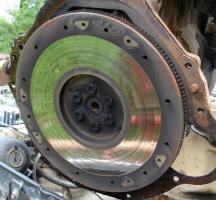
The flywheel should always be resurfaced or replaced when a clutch is changed. Oil, dirt, grease, warpage, cracks or grooves on a flywheel can cause clutch problems. So too will excessive runout. Remember to mark the index position of the flywheel before you remove it so it can be reinstalled in the same position as before. This is essential on externally balanced engines. New bolts are also recommended. Use a torque wrench to tighten to specifications.
If a flywheel is cracked or damaged or cannot be resurfaced, replacement is required.
With stepped flywheels, equal amounts of metal must be machined off both steps to maintain the same relative height difference between the two. If only the wear surface is machined, it will reduce the pressure exerted by the pressure plate against the clutch disc.
With dual mass flywheels, resurfacing is not recommended on BMW or Porsche. If the flywheel is worn, it must be replaced.
Use a pilot tool to align the clutch disc to the flywheel when the clutch is bolted in place. Eyeballing it isn't good enough because the transmission input shaft may not slide into place when you try to maneuver it into position. Tighten the pressure plate bolts gradually in a star pattern to avoid distorting the clutch. Never use air tools.
Lightly lubricate the splines on the transaxle input shaft and the release fork pivot, and make sure the new release bearing is properly installed in the release fork.
When reinstalling a rear-wheel drive transmission, support the weight of the tranny until it is bolted in place. If you let it hang while the input shaft is engaged with the clutch, it may bend or distort the hub in the clutch disc and prevent it from releasing.
Proper adjustment of the clutch linkage is also a must after replacing a clutch. Follow the procedure in the manual and make sure the amount of pedal play is correct.
Once the transmission or transaxle has been reattached to the engine, check the oil level and add the proper lubricant if low.
The job isn't finished until you test drive the vehicle to make sure the clutch is working properly and the transmission shifts smoothly.
 More Clutch Articles:
Common Clutch Problems
Diagnosing & Replacing a Faulty Clutch
Import Manual Transmission & clutch Service
Flywheel Resurfacing
 Click Here to See More Carley Automotive Technical Articles
Be sure to visit our other websites:

OBD2HELP
ScanToolHelp
TROUBLE-CODES