 More Transmission Articles:
Out with the old and in with the new. Transmission fluid flushing is a service that replaces old worn-out automatic transmission fluid (ATF) with fresh new fluid to prolong the life of the transmission. Considering the fact that it costs $2,500 to $3,500 or more to replace a transmission or transaxle these days, the cost of a fluid flush is peanuts by comparison.
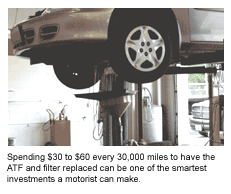
Spending $100 to $200 to have the ATF in your transmission replaced can be one of the smartest investments you can make in protecting your transmission. Just like regular oil and filter changes, replacing the ATF for preventive maintenance can reduce the risk of a premature transmission failure and extend the life of your transmission.
Flushing out the old fluid and replacing it with new fluid can prolong the life of a transmission, provided it is done correctly and at recommended service intervals. Depending on the type of driving you do, the type of vehicle you own and the type of automatic transmission or transaxle your vehicle has, OEM service recommendations can vary quite a fit: from every 30,000 miles to NEVER!
A growing number of late model transaxles and transmissions don't even have a recommended service interval. Many of these transaxles and transmissions also lack a dipstick, making it more difficult to check the fluid level and add fluid if needed. The auto makers claim their 'sealed" transaxles and transmissions never need service because the fluid ifs engineered to last upwards of 150,000 miles or more. Some will go the distance, but many will not for a variety of reasons.
Although the best advice would seem to be "refer to your vehicle owners manual or maintenance schedule for the OEM recommended automatic transmission fluid changes", our advice is to change the fluid every 50,000 to 60,000 miles for "normal" driving, and possiboly as often as every 30,000 miles if you drive with a heavy foot, use your vehicle for heavy towing or extensive mountain driving, or hot desert driving.
ATF does not last forever in spite of some auto maker's claims. Heat, oxidation and wear takes a toll on the fluid as the miles add up. Eventually, all ATFs will break down and need to be changed, even the so-called "lifetime" fluids.
According to many transmission experts, fluid breakdown is still the number one cause of most transmission failures. Worn-out, oxidized transmission fluid can't provide the same level of lubrication and protection as fresh fluid. Contaminants in the fluid and varnish buildup on critical surfaces take a toll over time. Dirty worn-out fluid can cause control valves to stick, and bearings and clutches to fail inside the transmission.
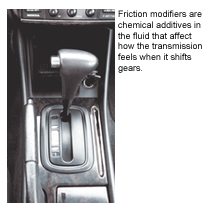
The friction modifiers in ATF play a critical role in the operation and longevity of late-model electronic automatic transmissions. Friction modifiers are chemical additives in the fluid that affect how the transmission feels when it shifts gears. Vehicle manufacturers have specifications for the type and amount of friction modifiers that are required for their transmissions. The specifications differ from one make and model of vehicle to another depending on which transmission they have and the mechanical differences in the torque converters and clutch packs. That's why Ford, Chrysler, General Motors, Honda, Toyota, Nissan and the other OEMs have so many different ATF formulations.
If the critical friction modifiers in the fluid break down, shifts may become rough and jerky - a condition known as transmission shudder.
Driving conditions that increase the normal operating temperature of the fluid will also accelerate oxidation. This includes things like aggressive driving, pulling a trailer, mountain driving, highway driving with increased wind resistance due to a car-top carrier, high speed driving during unusually hot weather, etc.
Most ATF can handle normal operating temperatures of 175 to 190 degrees F. But as the operating temperature goes up, the life of the fluid drops. For every 20 degree increase in fluid temperature beyond the normal range, the life of the fluid is cut roughly in half! That's why many vehicle manufacturers recommend changing the ATF at 30,000 to 50,000 miles if a vehicle is subjected to "severe use" instead of "normal" use.
Worn-out transmission fluid typically has a burnt smell and a discolored brownish appearance. A drop of worn fluid placed on a paper shop towel will tell you if the fluid is good or bad. If the spot is widely dispersed and red or light brown in color, the fluid is probably still good. But if the spot does not spread out and is dark in color, the ATF is oxidized and should be changed.
A simple drain and fill does not do a complete job of replacing the old fluid with new. Why? Because as much as half of the old fluid will remain trapped inside the torque converter when the transaxle or transmission is drained. To get ALL of the old fluid out, a "Fluid Exchange Machine" should be used. Most transmission shops have this type of equipment as do most new car dealers.
A complete fluid change takes only about 10 to 15 minutes. On most vehicles, the fluid is exchanged while the engine is idling with the transmission in Park. But on some, the ATF stops circulating through the external ATF cooler when the transmission is in Park. On these applications, the transmission has to be placed in Neutral rather than Park for a complete exchange.
Some fluid exchange/flush machines also allow the use of a cleaner product to remove varnish and sludge from neglected transmissions. If the machine has a pressure gauge, it can detect possible restrictions in the transmission fluid circuit (filter, lines or ATF cooler). Normal pressure readings may be as low as 8 to 10 psi with some vehicles. Readings less than 8 psi may indicate a restriction.
Always use ATF that meets the vehicle manufacturer's requirements. Refer to the owners manual or dipstick for the type of fluid required. Using the wrong type of fluid may cause shift problems and possible transmission damage!
For more information about choosing the right ATF for your vehicle, see Automatic Transmission Fluid (types and applications)
A complete transmission service should also include replacing the filter inside the transaxle or transmission. On most applications, the pan on the bottom of the unit needs to be removed to change the filter. Other applications may have a small external spin-on filter for the transmission. Some older Asian transmissions don't even have a filter. They just use a screen to keep debris from being sucked into the transmission.
ATF filters are relatively coarse compared to an engine oil filter. A typical ATF filter may have a rating of 60 to 125 microns or higher -- compared to 20 to 25 microns or less for an oil filter. The reason why is so the filter will pass enough fluid when the ATF is cold. Yet it only takes a particle the size of a human hair (about 30 microns) to jam a transmission valve! For this reason, always buy a quality name brand replacement filter, not the cheapest filter you can find online.
If you are having the transmission filter replaced, make sure the to to any cleaning and flushing of the transmission first. This will allow the old filter to trap contaminants that may be circulating in the old fluid or loosened by the cleaning chemical.
Many flush equipment manufacturers recommend adding special "conditioner" to the AFT when the fluid is replaced. Such products are claimed to revitalize seals and o-rings in older high mileage vehicles, help prevent leaks, extend the life of the fluid and help smooth shifts. Even so, most auto makers warn against using any type of additives with the type of ATF specified for their transmissions, especially CVT transaxles and transmissions. Such additives may cause more problems than they supposedly prevent.
More Transmission Articles: Click Here to See More Carley Automotive Technical Articles