 Related Articles:

Have you checked the wheel bearings on your car or truck recently? Wheel bearings on late model vehicles are sealed and require no maintenance or adjustments, but that doesn't mean they will last forever. Many wheel bearings that are worn and may need to be replaced are being overlooked because nobody thinks to check them when changing tires, or working on the brakes or suspension.
Wheel bearings can be expensive to replace. List prices for a typical sealed wheel bearing and hub assembly with an internal ABS sensor or external ABS tone ring run from $140 to $200 or more. If you have a repair shop replace the bearing assembly, the added labor can easily add up to a $500 to $650 or higher repair bill!
The average life of a sealed wheel bearing and hub assembly is around 100,000 or so miles, though the bearings are designed to last upwards of 150,000 miles or more with normal driving. Consequently, the wheel bearings may or may not last the lifeof your vehicle.
According to a Babcox research survey, 51 percent of bad wheel bearings are identified and replaced as a result of someone complaining about noise, 24 percent are found during a brake job, and 19 percent are discovered during an alignment check.
A classic symptom of a bad wheel bearing is noise. If a wheel is making "funny" noises when driving (squeaks, chirps, squeals, moans, etc.), or you hear a grinding noise when turning, it may indicate a bad wheel bearing. Other symptoms include steering wander or possibly a pull to one side when braking.
To check a wheel bearing, grasp the tire at the 12 and 6 o'clock positions and attempt to rock the tire. If you feel any play, the bearings are loose and need to be replaced. Also, rotate the tire by hand. Any roughness or noise from the bearings would also tell you the bearings are worn or damaged and need to be replaced.
If one wheel bearing has failed, pay close attention to all of the other hubs on the vehicle, too, especially if the vehicle has a lot of miles on it. Chances are some of the other bearings may also be nearing the end of their journey.
On vehicles equipped with anti-lock brakes and hub assemblies with an integral ABS sensor or tone ring, the ABS warning light will come on if a wheel-speed sensor is reading erratically or the signal is lost. The ABS system will set a fault code that corresponds to the sensor location (left front, right front, right rear or left rear) and disable the ABS system until the fault is fixed. On these vehicles, the only way to get the ABS light to go out is to replace the hub assembly (assuming the problem is not a simple wiring fault or loose connector).
There is no way to disassemble and repair a sealed hub assembly. If the internal ABS sensor has failed or if the external ABS tone ring on the hub is damaged or badly corroded, the whole unit must be replaced. The same goes for any other sealed wheel bearing and hub assembly. If anything is wrong with it,. the whole assembly must be replaced. It cannot be rebuilt or repaired.
Adjustable wheel bearings on older vehicles, on the other hand, can be adjusted, cleaned and repacked with grease, and replaced if the bearings are bad. A leaky grease seal can also be replaced without having to replace the bearings, too.
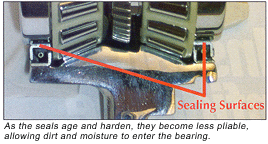
A bearing failure can be dangerous because it may cause the wheel to separate from the vehicle and/or cause a loss of steering control! It's not something to ignore or put off because there is no way to know how many miles the bearings will go before the unit fails completely.
The other safety issue involved is the ABS system. As long as the ABS warning light remains on, the ABS system is disabled. This should not affect normal braking, but it will prevent the ABS system from helping out in an emergency or when braking on a slick surface.
Replacing a sealed wheel bearing and hub assembly involves removing the wheel, hub nut and brakes to replace the unit. Do not use an impact wrench for removal or installation. Use a torque wrench and tighten all bolts and nuts to specifications.
Many hub units for FWD cars and minivans come with a new hub nut. Use it. And, be sure to torque it to specifications with a torque wrench. Never use an impact wrench to tighten the hub nut as this may damage the wheel bearings.
Proper torque on lug nuts is very important for three reasons. One is to keep the lug nuts from loosening up and the wheel coming loose, another is to prevent distortion of the brake rotor behind the wheel, and a third is to prevent broken studs. A torque wrench should be used for final tightening of the lug nuts, and the nuts should always be torqued to the recommended specifications.
CAUTION: Torque specifications for lug nuts are always for CLEANand DRY studs and lug nuts. That means no oil, no grease, no anti-seize and no lubricants of any kind. Any of these products will reduce the friction between the threads. This may seem like a good thing to prevent rust and frozen lug nuts, but the reduction in friction means a much higher percentage of the applied torque (up to 25% or more) will go toward loading the lug nuts. The end result may be brake rotor distortion or broken studs!
Wheel studs should be cleaned with a wire brush to remove rust and dirt BEFORE the wheels are mounted. If the lug nuts are heavily rusted or have damaged threads and won't turn easily on the studs, replace the lug nuts. The same goes for any wheel studs with damaged or badly corroded threads. And remember to mount the wheels DRY with nothing on the threads.
Related Articles:  Click Here to See More Carley Automotive Technical Articles